Queen Creek Water Conservation Programs for Residents Busines
Queen Creek Water Conservation Programs: What Residents and Businesses Can Get Paid For in 2026
You have probably heard the scary headlines. Colorado River shortage. Record low lake levels. It is easy to picture Queen Creek turning into a dust bowl.
Here is the short version. The river is short on water again this year. That cuts into Arizona's supply. So Queen Creek is doing something smart. It is paying you to rip out thirsty grass. That money is on the table right now. It works for homeowners. It works for businesses, HOAs, and schools too.
Here is the full breakdown. What it pays. What can get you denied. And how AZ Grass Pros can help you get it done right.
Why Queen Creek Cares About Water Right Now
The short version on the river shortage
Arizona leans hard on the Colorado River. That river has been shrinking for years. Right now supplies are down about 30% from normal. Lake Powell and Lake Mead have both sat at low levels this year.
What that means for your yard
Towns across the Valley are all doing the same thing. Some tighten watering rules. Others hand out rebate money instead. Or both. Queen Creek's move is simple. Pay people to swap out grass now, before things get tighter. That is where the turf rebates come in.
Residential Turf Conversion Incentive Program
What it pays
Homeowners can get $2 per square foot to remove living grass. Swap it for low-water landscaping instead. The most you can earn is $5,000 per property. You need to convert at least 500 square feet to qualify.
The plant rule that trips people up
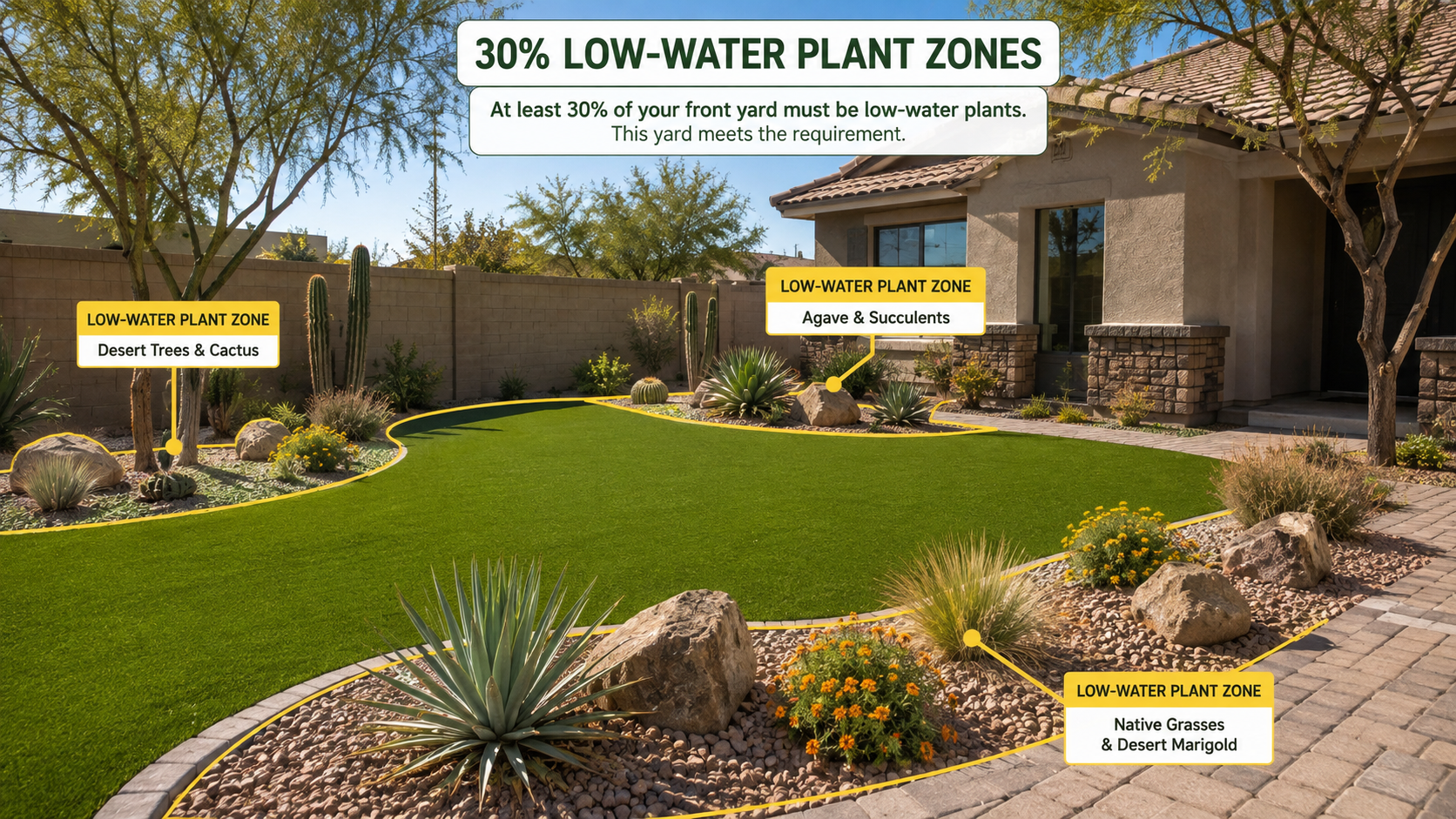
Say you go full artificial turf. Your yard still needs plants too. You need 30% plant coverage once those plants grow in. Every plant has to come from Queen Creek's approved low-water list. Front and back yards get scored on their own. A leafy backyard cannot cover for a bare front lawn.
How much artificial turf is covered
Yes, you can use artificial turf. The rebate covers your first 1,000 square feet of it. Want more turf than that? You can install it. You just will not get paid for the extra.
What you need to apply
Grab your Queen Creek utility account number. Sketch a rough plan. Show what is coming out and what is going in. Take 3 to 5 clear photos of each area. Doing both the front and back yard? Plan for 6 to 10 photos total. One more rule: no spray irrigation in the new area. Hardscape cannot cover more than 25% of the space either. Skip the concrete and plastic sheeting. Stick with pavers or something that lets water through.
The inspection steps
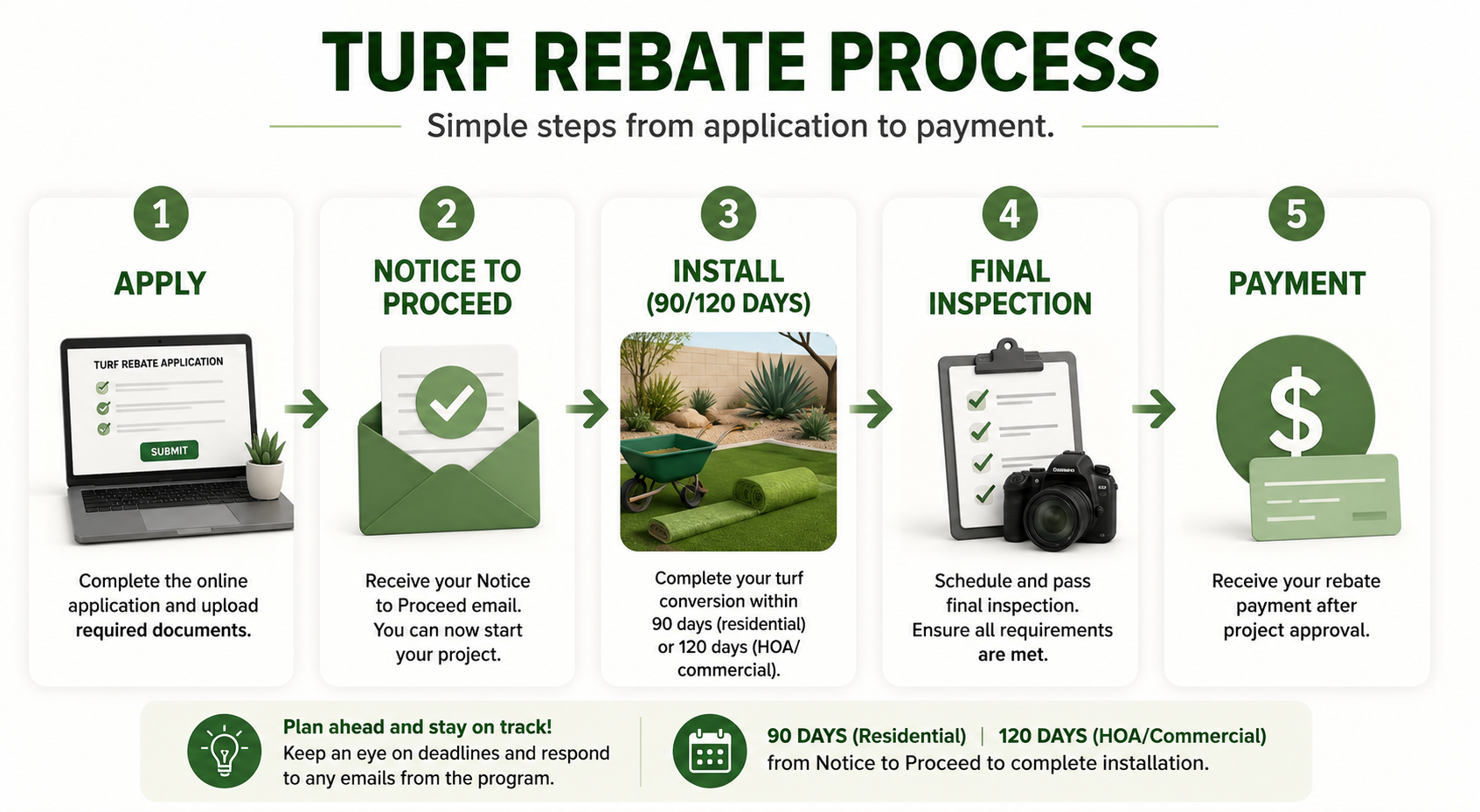
This is not a submit-and-forget program. Town staff review your application first. They may come check out your yard in person too. Once approved, they send you a Notice to Proceed. That is your green light. Do not touch a shovel before that notice lands in your inbox. Start early, and you lose the rebate. From there, you get 90 days to finish. When you are done, staff verify everything with a few more photos. Payment lands by direct deposit. It usually takes about six weeks.
Non-Residential Turf Conversion Incentive Program
Who this covers
This one is for businesses, HOAs, schools, parks, and municipal buildings. Multi-family properties count too. Salt River Project helps fund it alongside the town.
What it pays
Same rate as the homeowner side. $2 per square foot, up to $20,000 per property, per year. Artificial turf is allowed here too. It gets capped at 5% of your total landscaped area, or 1,000 square foot sections, whichever is smaller.
The process for property managers
The steps look a lot like the homeowner program. A few extras get added on top. You will need to verify your business with the state. You will also need to write up your project plan. Your existing grass needs to be mostly alive at inspection time. One nice difference: you get 120 days to finish, not 90. That makes sense. Commercial jobs tend to be bigger.
Water Efficient Technology Program
Turf is not the only thing Queen Creek will pay for. Maybe you want new smart sprinkler controls. Or new water meters. Or a way to track your cooling system's water use. Businesses can get money back for that too. Up to 50% of costs, capped at $20,000 per property.
One thing to flag. Right now, the town says this program is going through a funding refresh. Give their team a quick call first. Make sure it is open before you count on it.
How to Apply Without Getting Denied
These programs pay well. The paperwork is real too. Here is where most people mess it up.
Starting too early. No Notice to Proceed means no rebate. Even if your finished yard looks perfect.
Funding runs dry. Money goes out first come, first served. Apply early in the cycle if you can.
Missing the plant math. People plan their turf layout. Then they find out mid-project it falls short on plant coverage.
Skipped paperwork. Missing photos. A vague sketch. A forgotten tax form. Any of these can slow your payout way down.
If you are ready to apply click this link to get started!
This Is Bigger Than Just a Rebate
Even without the free money, swapping out thirsty grass still makes sense. The river shortage is not going away soon. Think about what you get. Lower water bills. Way less yard work. One less thing to worry about, if Queen Creek ever tightens its rules.
Not sure which way to go? Both artificial turf and xeriscaping check the box for the plant rule. The right pick comes down to how you use your yard. Your budget matters too. So does how much real green you want mixed in.
How AZ Grass Pros Helps Queen Creek Homes and Businesses
This is exactly the kind of job we handle every day at AZ Grass Pros. We walk your property first. Then we help build a plan that clears the 30% plant rule. After that, we put in turf and low-water plants. It is built to pass Queen Creek's final check the first time. Want to put part of your new yard to use, not just look at it? We also build custom putting greens.
We serve homes and businesses across the Queen Creek area. We cover the greater East Valley too. We know these rules inside and out. We help clients pass them all the time.
Ready to see what your yard could look like? Curious what it could pay you? Get a free quote from AZ Grass Pros and let's talk it through.
FAQ
How much does Queen Creek pay to remove/convert grass?
Homeowners can get $2 per square foot, up to $5,000. You need to convert at least 500 square feet.
Can I use artificial turf and still get the rebate?
Yes. The rebate covers your first 1,000 square feet of artificial turf. Your full yard still needs to hit the 30% plant rule though.
Do businesses and HOAs qualify too?
Yes. The non-residential program pays up to $20,000 per property each year. It is funded through Queen Creek's partnership with Salt River Project.
Can I start my project before I apply?
No. You need written approval first. It is called a Notice to Proceed. Start early, and you lose the rebate.
Is funding always available?
No. Funding is limited. It goes out first come, first served. Apply early if you can.
Is the smart irrigation and technology rebate open right now?
It has been shifting with funding cycles in 2026. Give Queen Creek's conservation team a quick call to confirm before you apply.